Activities to Cover
- CROP STORAGE & MONITORING - Prepare/maintain crop/forage storage (pest control, temperature monitoring).
- CROPS, GRASS & FORAGE - Monitoring any / all of these for growth, health and sward / crop maintenance
- CROPS, GRASS & FORAGE- Selecting for grazing / forage production / harvest
Practical Evidence Ideas
Some ideas for photographs, videos, witness statements or practical activities to record as Evidence in your Learning Journal.Duty Images
6 Steps to Great Journal Entries
What a suitable Learning Journal Entries Looks like...
Below are two examples that could be used as evidence:
1. Preparing And Monitoring Silage Storage
2. Monitoring Grass Growth And Selecting Fields For Grazing.
Preparing And Monitoring Silage Storage
Today I helped prepare and monitor the silage clamp on the farm. I worked with my supervisor and another farm worker to check the condition of the silage store and make sure everything was being stored correctly.
This was a forage storage and monitoring job. We checked the clamp sheets and tyres to make sure they were secure and looked for any signs of damage that could let air or water into the silage. I also helped place bait stations around the clamp to control rats and mice and checked the temperature of the silage in different areas using a silage probe.
The supervisor explained that if air gets into the silage, it can spoil and lose nutritional value. Pest damage can also contaminate the forage and create health problems for livestock. By monitoring the temperature and keeping the clamp sealed properly, we can maintain good-quality feed for the cattle throughout the winter.
We completed the work safely by wearing steel toe cap boots, gloves and high-visibility clothing. We stayed away from the edge of the clamp to avoid falling and used the probe carefully to prevent injuries. I also made sure my hands were washed after handling bait stations and followed the farm's pest control procedures.
Monitoring Grass Growth And Selecting Fields For Grazing.
Today I helped monitor grass growth and decide which paddocks would be used next for grazing. I worked alongside the farm manager and discussed the condition of different fields and the feed requirements of the cattle.
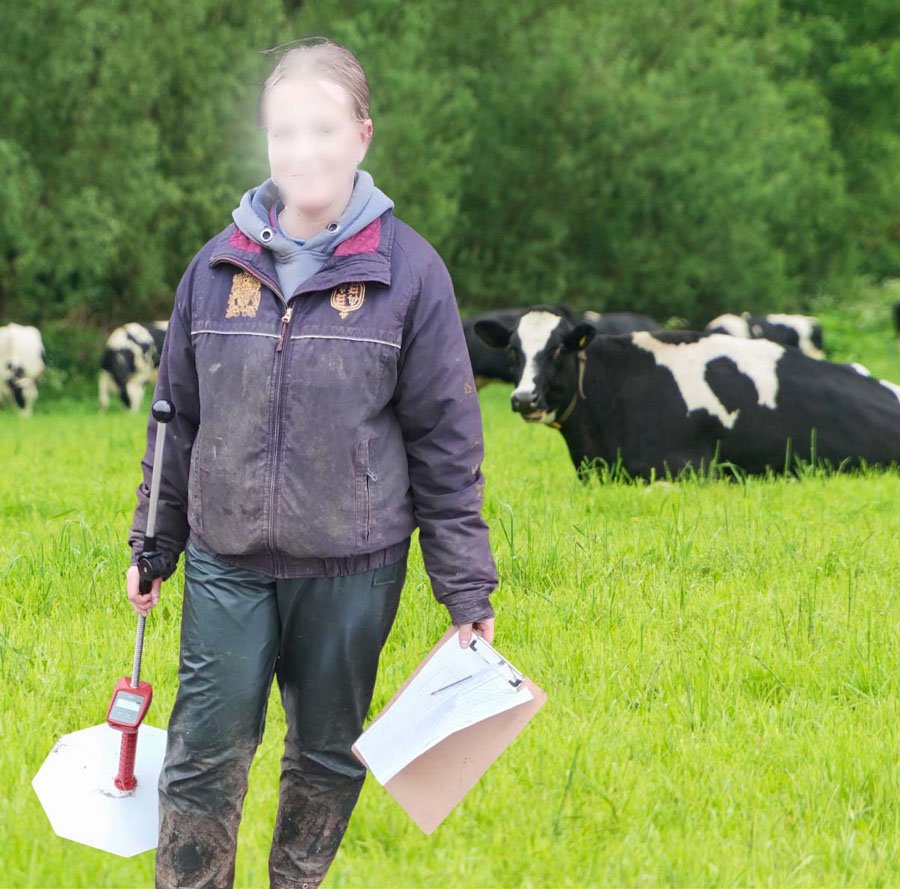
This was a grass monitoring and grazing management job. We walked several paddocks and checked grass height, density and any signs of weeds or poaching damage. We used a plate meter to measure grass covers and recorded the results. After comparing the grass measurements, we selected the field that had reached the target cover and was ready for grazing.
I learned that selecting the correct field is important because grazing grass too early reduces regrowth and grazing too late means the grass loses quality and becomes less nutritious. Monitoring grass growth helps the farm make the best use of home-grown forage and reduces the need to buy extra feed.
We carried out the work safely by wearing suitable footwear and high-visibility clothing because machinery was operating nearby. We checked fences and gateways before moving around the fields and were aware of livestock behaviour when walking through paddocks.
Common Mistakes
Example: "jabbed piglets".” This gives very little evidence or detail.
Explaining why the task matters shows understanding and learning.
PPE, safety awareness are often forgotten.
Working with supervisors or stock staff is useful evidence.
Look round silage bales. Walked through paddocks. This is not enough detail to show learning.
Words like “stuff” or “helped out” do not show real evidence.
Using the same wording every week weakens journal evidence.
Good entries mention details observed and any issues found.
Mentioning any equipment used (syringe, iron injection, marker, spare needles ) strengthens evidence.
Strong entries show understanding, not just completing jobs.