Observe & Gather Get started
Begin by building a livestock background profile for the herd, flock or batch you are studying. This gives you a clear snapshot of the animals, the system and the reasons behind the current management approach.
Building the herd profile
- 1 · The animalsWho are they?Species, breed, age and numbers
- 2 · The systemHow are they kept?Housing, grazing, feeding and health
- 3 · The goalWhere are they going?Production stage and market
A clear profile explains why the unit is managed this way.
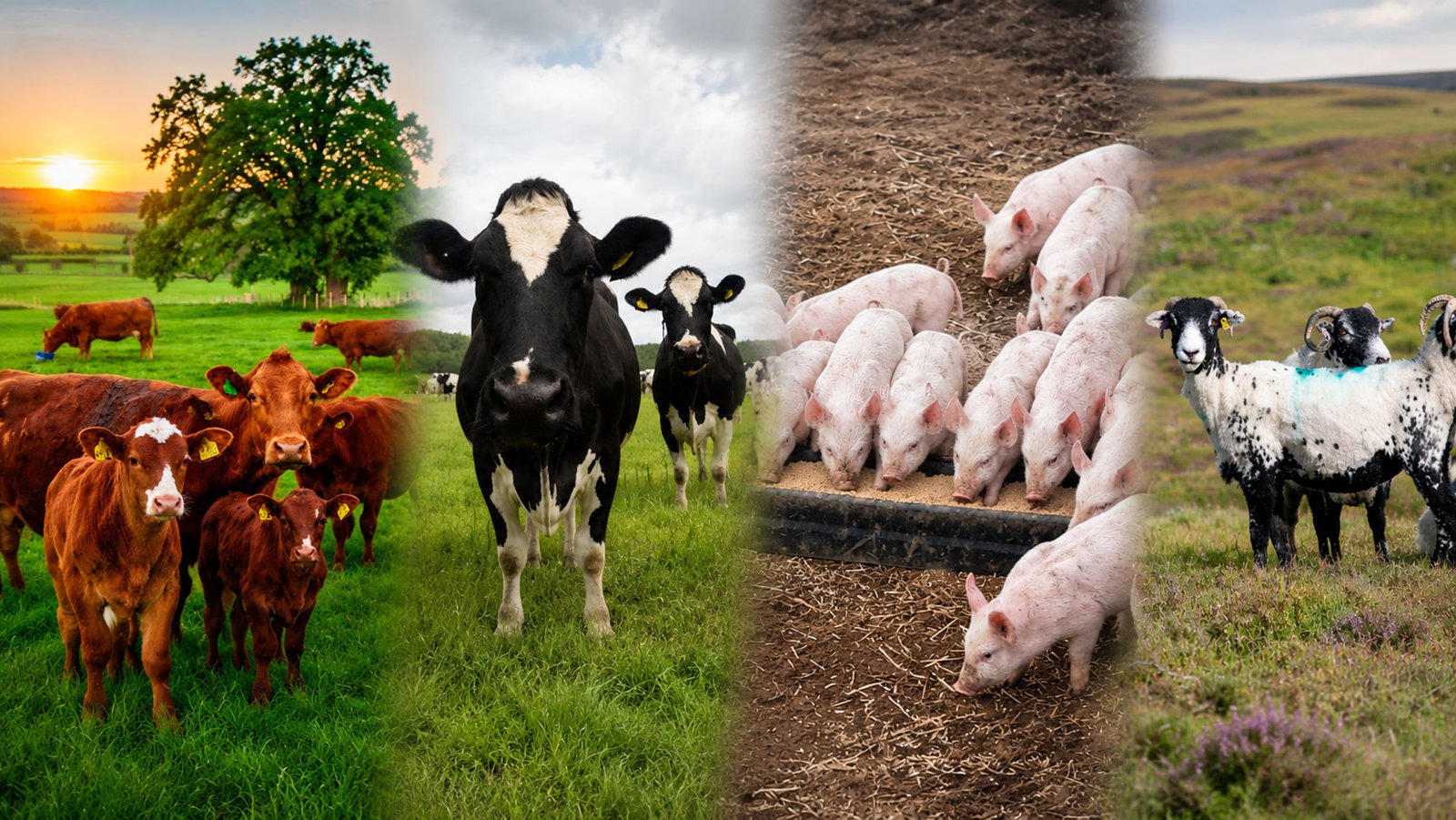
- Record species, breed, crosses and whether the livestock are home bred or bought in.
- Note the age profile, production stage and end product or market goal.
- Gather information on housing, grazing, feeding, breeding and health routines.
What to Include Know this
- Livestock type, breed, origin and group size.
- Farm history and any major changes in system or breed.
- Housing and grazing system, feeding plan and breeding management.
- Health status, welfare practices, technology use and relevant risks.
Workplace Activities Do these
- Use farm records, supervisor conversations and your own observations.
- Record how the livestock are managed and why the system works the way it does.
- Identify strengths and areas for improvement.
- Keep the information specific and evidence-based for your portfolio.
Plan Your Project Plan ahead
Now you have chosen the herd, flock or group of animals you will monitor, it is time to plan how you will investigate its performance.
The Hands On Herds Project is a work-based investigation. Organise your time at work to observe the animals, collect information, gather evidence and record what you discover. You do not need a complicated project plan. Think ahead and decide what you need to do, when you can do it and what information or evidence you need to collect.
Your Project Plan
Think about the main stages of your investigation:
- Find out about the animals: identify the species, breed, herd, flock or batch, production system and number of animals.
- Investigate management: find out about housing, feeding, handling, breeding or production arrangements, as relevant to your animals.
- Monitor animal performance: record observations and identify changes in health, growth, production or performance.
- Investigate health and welfare: observe the animals, identify potential problems and find out how health and welfare are managed.
- Collect performance information: gather relevant figures such as growth rates, milk yield, fertility, lambing or calving results, mortality, feed use or margin over feed costs, depending on your enterprise.
- Gather workplace evidence: use observations, farm records, photographs and discussions with your employer or colleagues.
- Analyse performance: consider what the figures tell you, what went well, what affected performance and what could be improved.
- Complete your project booklet: organise your findings and complete the required activities.
- Upload evidence to OneFile: transfer suitable evidence to your e-portfolio and link it to the relevant duties.
- Complete your Learning Journal: reflect on what you have learned and how you have developed your knowledge and skills.
Remember: you will not be able to complete every stage at once. Some activities will take place throughout the production cycle, while others may only be possible at particular times.
My Project Plan
Use the table below to plan your activities. Add dates or time periods that fit around your work and the production cycle.
- When will I do it? Include how often you need to observe or collect information.
- What information or evidence do I need? Consider farm records, observations, photographs, measurements and discussions.
- Review comments: Record what you have completed, any changes to your plan and what you still need to do.
| Activity | When will I do it? And how many times? | Information or evidence I need | Review comments |
|---|---|---|---|
| Animal + enterprise information | Species, breed, number of animals, production system, purpose and relevant background information | ||
| Management and housing | Housing, handling, daily routines, equipment and management practices relevant to the enterprise | ||
| Feeding and nutrition | Diet, feed types, feeding methods, feed use and relevant nutrition records | ||
| Animal monitoring | Observations, measurements and records of growth, production, behaviour or performance | ||
| Health and welfare | Health checks, welfare observations, health plans, disease prevention and any problems identified | ||
| Breeding and reproduction | Breeding arrangements, fertility, pregnancy, births, hatchability or other relevant reproductive records | ||
| Production performance | Relevant figures such as growth rates, milk yield, egg production, weaning weights or other enterprise-specific measures | ||
| Costs and efficiency | Relevant costs, feed use, output figures and measures such as margin over feed costs or other appropriate performance indicators | ||
| Workplace evidence | Photographs, farm records, observations, measurements and discussions with the employer or colleagues | ||
| Performance analysis | What the figures show, factors affecting performance, strengths, problems and possible improvements | ||
| Project booklet | Completed activities, findings and supporting evidence | ||
| OneFile submission | Suitable evidence uploaded and linked to relevant duties | ||
| Learning Journal | Short reflections on learning, workplace experience and skills developed |
Farming does not always follow a timetable. Weather, animal health, breeding cycles, availability of records and changes in farm routines can all affect your plans.
Some information may already be available in farm records, while other evidence will need to be collected through your own observations and discussions with colleagues. If something changes, adjust your plan. Record what you did instead and explain why, where relevant.
At the end of the project, review your plan. Consider what you completed, what changed and what you would do differently next time. Your plan should help you make the most of opportunities at work, build a clearer picture of animal performance and avoid leaving important evidence until the last minute.
Remember: the aim is not just to collect information about your animals. It is to use that information to understand how well they are performing and why.
Background Profile Record details
Use this section to build a practical profile of the livestock enterprise.
- Livestock type / breed / crosses
- Home bred or bought in
- Age and stage of production cycle
- End production goal
- Housing and grazing system
- Feeding, breeding and health practices
Observe & Gather Table Fill in
Use this table to record your workplace evidence for this section. Once the table is complete, use the information to write a short summary of your findings for OneFile. The sentence starters below are there to help you turn your notes into a clear written report.
| Topic | Notes |
|---|---|
| Livestock type / breed / crosses | |
| Home bred or bought in | |
| Age and stage of production cycle | |
| End production goal | |
| Housing and grazing system | |
| Feeding plan / approach | |
| Breeding management | |
| Health status and welfare practices | |
| Technology used in the enterprise | |
| Other relevant points and possible improvements |

Remember to upload your evidence to OneFile.
Evidence Ideas Portfolio proof
- Photos or sketches of the livestock group and facilities
- Farm records, movement notes or stock lists
- Notes from discussions with your supervisor
- Short written reflections on strengths and improvements
Employer Discussion Mentor input
Discuss the livestock background profile with your employer and explain what factors influence the current performance and welfare of the group.
Livestock Background Profile: Analyse Understand Report Write up
Project Brief
Using what you have learnt and the data you have gathered about the livestock background profile, write a summary that gives an overview of the enterprise. Use the information you collected about the animals, management systems and operational practices to evaluate productivity, welfare and sustainability. Your summary should reflect both current practice and any historical context, with attention to health, safety and environmental impact.
Checklist of what to include
- An overview of the livestock type, breed or crosses and the main production goal
- Details of whether animals are home bred or bought in
- Information about age, stage of production and housing or grazing system
- Evidence of feeding, breeding and health practices
- Any strengths, weaknesses or possible improvements
- Reference to welfare, sustainability and safety
Sentence starters
- “The livestock enterprise focuses on raising…”
- “The herd/flock consists of approximately…”
- “The livestock are housed in a system that includes…”
- “Feeding is managed through a combination of…”
- “Health and welfare are maintained by…”
Remember to upload your evidence to OneFile.
Livestock Choices: Example Answer Model response
Use this for guidance, not copying. This is a fictional England suckler herd (60 cows exposed, 54 calves weaned, 2025/26 season). Replace all figures, dates and policies with verified evidence from your workplace.
Herd at a glance
The background details of the enterprise
- Livestock
- Beef suckler cattle: 60 spring-calving cows, mainly Limousin-cross on a British Friesian/Hereford base; 2 terminal Charolais-cross bulls. Home-bred replacements; no cattle bought in.
- Age
- Cows mainly 3–8 years; 12 replacement heifers aged 12–24 months; calves born February–April, weaned at about 7 months. Illustrative annual records: 57 cows calved and 54 calves weaned.
- Production stage and goal
- Spring-calving, predominantly grass-based system. Rear one calf per cow to weaning; sell weaned calves to a local store buyer. Retain the best heifers; cull empty, unsound or poor-performing cows.
- Housing
- Cows and calves graze from turnout to housing; winter accommodation is a straw-bedded group yard with a separate calving/sick pen. Calves remain with dams until weaning.
- Feeding
- Rotational grazing in season; winter diet based on tested grass silage, with straw/minerals as appropriate. Cows are grouped by condition and stage; clean water is available at all times.
- Breeding
- Natural service after a defined spring bulling period. Two soundness-checked bulls used in separate groups; sire choice prioritises calving ease, fertility, feet/legs, temperament and suitable growth. Pregnancy scan after breeding.
- Health and welfare
- Annual vet review; risk-based vaccination and parasite control agreed with the vet; daily observation, prompt isolation/assessment of sick animals, calving checks and treatment records. Actual products and dates must follow the farm vet plan and labels.
- Technology
- EID tags and a weigh crate are used for identification and weighing; records are kept in herd software and the statutory holding register. No automated feed or activity sensors in this example.
Example report
Explaining the enterprise in your own words
This unit runs 60 spring-calving suckler cows, two terminal-sire bulls and a small replacement group. Cows and calves graze seasonally and are housed on straw during winter. The aim is to rear one healthy calf per cow and sell weaned calves as stores, retaining suitable heifers. EID and a weigh crate support identification and performance recording. In the example season, 57 cows calved and 54 calves were weaned. The system’s strengths are a clear seasonal pattern, home-bred replacements and a forage-led diet. To understand performance more fully, I would reconcile the calving and weaning records by cow and calf ID, record body condition and use actual forage analysis. The farm profile and all figures here are illustrative; a learner must substitute verified workplace information.
Example discussion
Strengths and an improvement opportunity
Strengths are home-bred replacements, a simple seasonal system and individual ID/weight records. Improvement opportunity: record every calving outcome and cow body condition consistently, then review barren rate, calf losses and weaning weights with the vet/adviser. These are sample conclusions, not findings about the learner’s farm.
Example project plan
Fitting the investigation around the herd
Swipe the table sideways to see every column.
| Activity | When will I do it? And how many times? | Information or evidence I need | Review comments |
|---|---|---|---|
| Animal + enterprise information | At project start; confirm with supervisor. | Herd list, breed, numbers, system and season dates. | Completed using an illustrative profile; replace with the farm’s verified records. |
| Management and housing | At housing, calving and turnout; observe at least weekly. | Yard layout, bedding, ventilation, handling facilities and routine checks. | Sample plan; use dated notes/photos with permission. |
| Feeding and nutrition | At housing and monthly while housed; review grazing weekly. | Silage analysis, feed plan, mineral provision, water checks and body condition. | Sample plan; confirm ration and feed analyses with farm records. |
| Animal monitoring | Calving season daily; weigh calves at birth (if recorded) and weaning. | Calving book, calf IDs, weights, health/behaviour observations. | Example: use consistent IDs and dates; do not invent missing weights. |
| Health and welfare | Daily observation; monthly record review; vet-plan review annually. | Health plan, treatment/vaccination records, welfare observations and incidents. | Follow the actual veterinary plan; record any changes and reasons. |
| Breeding and reproduction | Before bulling; during calving; scan after breeding. | Bull checks, cow condition, mating groups, scan and calving outcomes. | Example timing only; agree dates with supervisor/vet. |
| Production performance | At weaning; annual review after calving season. | Cows exposed, calvings, calves weaned, losses and weights. | Example annual dataset supplied in the KPI analysis; validate locally. |
| Costs and efficiency | At ration review and annual business review. | Forage/feed costs, sale weights/prices, vet costs and labour where available. | Use confidential data only with employer permission. |
| Workplace evidence | Throughout; take photos only with permission. | Dated observations, anonymised records, measurements and supervisor discussion. | Keep evidence authentic, dated and attributable. |
| Performance analysis | After scanning and weaning; compare with the farm target. | KPI calculations, factors, strengths and practical improvement actions. | Example analysis uses 54/60 = 90%; no industry benchmark is claimed. |
| Project booklet | At project end; update as evidence is gathered. | Completed booklet sections and supporting evidence. | Transfer suitable evidence to OneFile as instructed in the booklet. |
| OneFile submission | After supervisor review and before submission. | Evidence uploaded and linked to relevant duties. | Learner to complete in their own OneFile account. |
| Learning Journal | Briefly after each main task; final reflection at project end. | What I did, what I learned, questions and skills developed. | Write in first person from actual experience; adapt the sample reflection. |