Observe & Gather Get started
Use the “Key Points” box to guide your discussion and what you put in the box.
Protecting herd health
- 1 · PreventStop problems startingBiosecurity, vaccines and the health plan
- 2 · ObserveSpot it earlyDaily checks against the 5 welfare needs
- 3 · ActTreat and recordCall the vet, treat and keep records
Prompt action protects the animal and the herd.
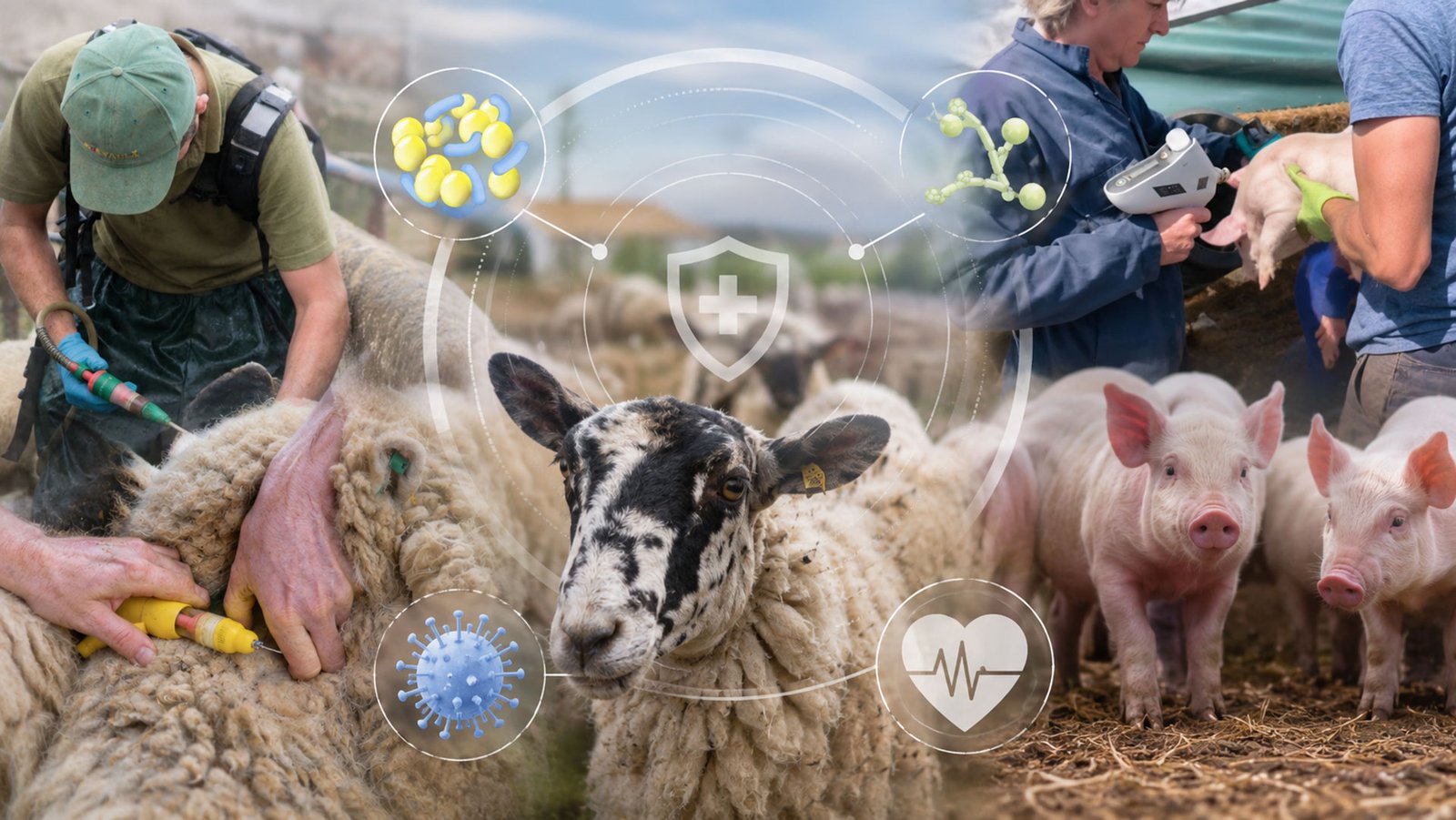
Health & Welfare
- Biosecurity – What measures are in place for people, livestock and equipment entering or leaving the farm?
- 5 Welfare Needs – How are the 5 welfare needs met for the livestock you are studying? Consider different stages of production.
- Health Plan – Does the unit have a livestock health plan? What are its key priorities?
- Who is involved? – Who developed the health plan and who is responsible for implementing and reviewing it?
- Routine health tasks – What vaccinations, preventative treatments, health checks and other routine tasks are carried out?
- Current health status – What are the main health problems or risks affecting these livestock?
- Health status & policy – Does the unit have a particular health status or policy, such as a closed herd? How does this affect management?
- Records & monitoring – What health and welfare information is recorded and how is it used?
What to Include Know this
- Biosecurity
- 5 Welfare Needs
- Health Plan and who is involved
- Routine health tasks
- Current health status and health status & policy
- Records & monitoring
Workplace Activities Do these
List vaccinations, preventative treatments and measures used for these livestock (this can be in a diagram form).
Health & Welfare Record Record details
Use this section to record the health and welfare practices you observe.
- Biosecurity
- 5 Welfare Needs
- Health Plan and who is involved
- Routine health tasks
- Current health status and health status & policy
- Records & monitoring
- Vaccinations, preventative treatments and measures used
Observe & Gather Table Fill in
Use this table to gather the health and welfare evidence you observe on the unit. Once you have filled it in, turn your notes into a summary of your findings for OneFile using the sentence starters below.
| Topic | Notes |
|---|---|
| Biosecurity | |
| 5 Welfare Needs | |
| Health Plan | |
| Who is involved? | |
| Routine health tasks | |
| Current health status | |
| Health status & policy | |
| Records & monitoring | |
| Vaccinations, preventative treatments and measures used |

Remember to upload your evidence to OneFile.
🩺 Health & Welfare: Euthanasia Decision-Making Work through it
What would you do if an animal was suffering?
You identify an animal that appears to be suffering from pain, injury or disease. Its condition is causing concern and euthanasia may need to be considered.
As the Livestock Technician, what would you do?
You are not being asked to carry out euthanasia. Your task is to demonstrate that you understand how to recognise the situation, make the appropriate decision and take the correct action.
Working through the situation
| Step | Your response |
|---|---|
| 1. RECOGNISE 🐄 What signs would make you concerned that the animal is suffering? | |
| 2. ASSESS 🔍 What would you consider before deciding what action should be taken? | |
| 3. ACT 🦺 What would you do immediately to protect the animal and people? | |
| 4. CONTACT 📞 Who would you contact for advice or professional action? | |
| 5. RECORD 📋 What information, records or paperwork would need to be completed? | |
| 6. REVIEW 🔄 What would you record or discuss afterwards? Could anything be done to reduce the risk of a similar problem occurring again? |
📸 Workplace Evidence
Discuss this procedure with your employer/supervisor and record what happens on your unit.
Who makes the final decision about euthanasia?
Who would normally be contacted?
What records/paperwork are completed?
Where is this information recorded on the unit?
Evidence attached:
☐ Photograph/document/example ☐ Learning Journal ☐ Supervisor discussion ☐ Other
Evidence Ideas Portfolio proof
- Medicine records or treatment plans
- Vaccination and parasite control records
- Photos of health checks or housing conditions
- Notes on welfare observations and actions
- Employer discussion notes on health management
Employer Discussion Mentor input
Discuss the welfare needs you observed, the health plan in place and how biosecurity and daily routines protect livestock and people.
Health & Welfare: Analyse Understand Report Write up
🧭 Project Brief
From what you have learnt Observing & Gathering – Health & Welfare : 🐄 Explain how the unit maintains livestock health and welfare and how it responds when an animal becomes sick, injured or is suffering. Use examples from your workplace to explain what happens, who is involved and why.
✅ Project Checklist – What to Include
🩺 Health Management
- Health plan and its main priorities.
- Routine health checks and monitoring.
- Vaccination and preventative treatment programmes.
- Common health problems and how they are managed.
- How health records are used.
🐑 Animal Welfare
- How the 5 welfare needs are met.
- How welfare is monitored during different stages of production.
- How signs of pain, illness, injury or suffering are recognised.
🚨 Responding to Welfare Problems
- What happens when an animal becomes sick, injured or is suffering.
- How treatment, further assessment or euthanasia is considered.
- Who is contacted and who makes the decision.
- How the animal and people are protected while action is taken.
🩺 Euthanasia Decision-Making
- How the need for euthanasia is identified.
- Who provides professional advice or carries out the procedure.
- How the correct procedure is followed for the livestock species.
- What records, paperwork and notifications are required.
- How the situation is reviewed afterwards.
🦺 Health, Safety & Environment
- Safe handling of livestock during health and welfare procedures.
- Safe use of equipment, medicines and PPE.
- Biosecurity measures.
- Safe disposal of waste and animal remains.
✍️ Sample Sentence Starters
Health Management
- “The health plan on our unit focuses on…”
- “Routine health is monitored by…”
- “Preventative treatments are used to…”
Welfare
- “The welfare of livestock is monitored by looking for…”
- “The 5 welfare needs are met by…”
Responding to Problems
- “If an animal is found to be suffering, the first action would be…”
- “The person responsible for making the decision is…”
- “Professional advice would be obtained from…”
Euthanasia
- “Euthanasia would be considered when…”
- “The decision would be based on…”
- “The relevant records and paperwork include…”
Reflection
- “The system works well because…”
- “One improvement that could be made is…”
Health & Welfare: Analyse Understand Report
(Draft – Final Version needs uploading / copying to OneFile)
See above for sample sentence starts to help you get started
Remember to upload your evidence to OneFile.
Health & Welfare: Example Answer Model response
Use this for guidance, not copying. This is a fictional suckler herd. Product names and timings must never be inferred from this sample; follow your farm’s vet plan.
Health and welfare at a glance
The plan, the people and the records
- Biosecurity
- Visitor sign-in and biosecurity guidance; clean boots/clothing and disinfect shared equipment; clean vehicles/equipment before entry where risk warrants. Isolate and assess arrivals under a vet-agreed plan; this fictional example is a closed herd.
- The 5 welfare needs
- Suitable environment: dry bedding, shelter, ventilation and safe handling. Suitable diet/water: balanced forage/feed and clean water. Normal behaviour: space to graze, lie, groom and interact. Appropriate company: stable compatible groups and separation when needed. Protection: prompt checks, prevention, treatment and humane decisions.
- Health plan
- Written herd health plan agreed with the farm vet, reviewed annually and after significant disease/performance changes. Priorities include calving, calf survival, lameness, fertility, vaccination, parasite control and biosecurity.
- Who is involved
- Farm manager and stockperson implement daily checks; vet advises on prevention, diagnosis and treatment. Employer reviews outcomes and records; learner follows instructions and reports concerns.
- Routine health tasks
- Daily visual checks; calving checks; routine vaccination and parasite control only as specified by the current vet plan; annual bull soundness review; pregnancy scanning; medicine storage/use and withdrawal periods recorded.
- Current health risks
- Illustrative risks: calving difficulty, calf scour/pneumonia, lameness, parasites, poor body condition and infectious disease. Record actual cases; investigate clusters with the vet rather than assuming a diagnosis.
- Health status and policy
- Assumed closed herd to reduce introduction risk. Check the real unit’s disease status, TB testing interval, movement restrictions and any assurance scheme requirements before use.
- Records and monitoring
- Record ID, date, signs, assessment, treatment/product/batch/dose/administrator, withdrawal period, outcome, vet advice, vaccination, calving, deaths and movements. Review patterns to update the plan.
- Vaccinations and preventative treatments
- Vaccines, parasite treatments and timing are determined by the herd vet from disease risk, product label, age, pregnancy status and local plan. Keep product names, dates and doses from actual medicine records; do not copy a generic schedule.
If an animal is suffering
Six steps: recognise, assess, act, contact, record, review
-
1. Recognise
Severe or persistent pain, inability to rise or walk, serious injury, laboured breathing, collapse, severe bloat, prolonged difficult calving, or failure to respond to treatment; observe from a safe position and report promptly.
-
2. Assess
Severity and duration of suffering, prognosis, response to treatment, likelihood and time to recovery, fitness to move, biosecurity, people safety and the vet’s advice. Do not delay urgent action where suffering is severe.
-
3. Act
Tell the responsible stockperson/manager immediately; protect the animal from further harm, minimise handling, provide safe isolation and water/shelter if appropriate. Keep people clear of danger and do not attempt an unauthorised procedure.
-
4. Contact
Contact the farm manager and farm vet. A trained, competent and legally authorised person carries out any euthanasia using a cattle-appropriate method; follow the vet’s direction and the farm procedure.
-
5. Record
Record animal ID, date/time, signs, assessment, advice, decision-maker, treatment or euthanasia method/competent operator, outcome, medicine records if relevant, carcass collection/disposal and required movement/register updates.
-
6. Review
Review with the manager/vet: likely cause, timeliness, whether the protocol was followed, any herd-level risk, and a practical prevention action. Update records and the health plan if needed.
Example report
Explaining health and welfare in your own words
The herd has a written health plan agreed with its vet and reviewed annually. Daily observation, calving checks, vaccination and parasite control follow the current farm plan; medicine use and outcomes are recorded against animal ID. The five welfare needs are supported through suitable shelter and bedding, adequate feed and water, social grouping, opportunities to graze and lie down, and prompt protection from illness, injury and distress. A sick or injured animal is reported, assessed safely and isolated if appropriate; the manager contacts the vet. Any euthanasia decision is made by the responsible person with professional advice, and the procedure is carried out by a trained, competent person under the farm protocol. The learner should record the real unit’s contacts and paperwork with the supervisor. Product names and timings must never be inferred from this sample.