Unit Aim Start here
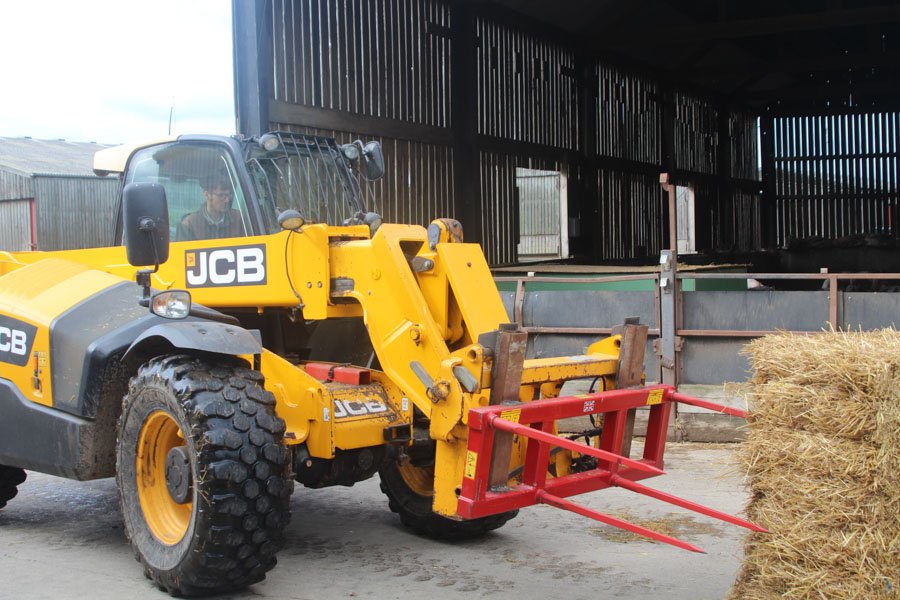
This unit is about checking a fork lift truck before driving or manoeuvring. It covers physical checks an operator needs to complete to meet legal and organisational requirements before each driving duty.
The unit is relevant to those who operate, move or manoeuvre fork lift trucks, or those who are responsible for fork lift trucks within logistics organisations.
Mission Challenge
Before you begin, name the top three checks or actions that matter most for this unit in your workplace.
Reveal model answer
Use site policy first, complete the critical safety and equipment checks, then confirm your method before carrying out the task.
How confident are you on this section?
Pick one to save your progress on this device.
Learning Outcomes 1 and 2 Core content
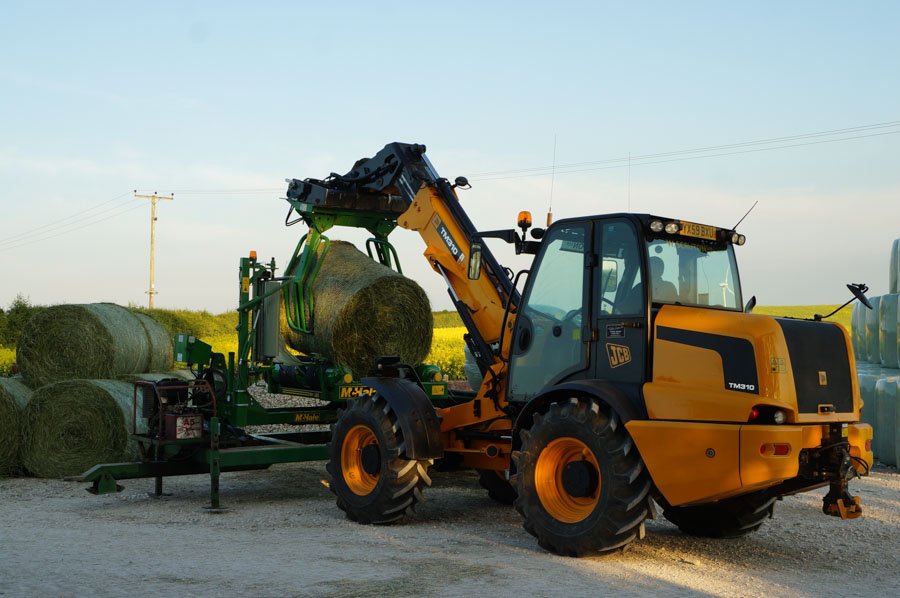
Learning Outcome 1: Know how to prepare the fork lift truck for driving or manoeuvring.
Assessment criteria:
- 1.1 Explain relevant organisational policies and procedures for preparing the truck, including health, safety and security, PPE, legal and operating requirements.
- 1.2 Explain how to check the truck has sufficient fuel or energy for the task or shift.
- 1.3 Explain operation of instruments and controls, including vehicle systems checks, gauges and controls checks, position of forks or attachments for load or travel, and indicators of electrical or mechanical problems.
- 1.4 Explain the driver responsibilities for the fork lift truck and the load.
- 1.5 Explain procedures for reporting defects, including previously reported problems.
- 1.6 Explain how to obtain information on previously reported problems.
- 1.7 Explain who is officially responsible for allocating equipment or task.
- 1.8 Identify problems that can occur when preparing the fork lift truck for driving or manoeuvring.
- 1.9 Explain the appropriate action to take for identified problems.
Learning Outcome 2: Be able to prepare the fork lift truck for driving or manoeuvring.
Assessment criteria:
- 2.1 Follow all relevant organisational policies and procedures related to health, safety and security, PPE, legal and operating requirements.
- 2.2 Check the truck has sufficient fuel or energy for the task or shift.
- 2.3 Check systems to ensure the truck complies with operational and legal requirements.
- 2.4 Carry out adjustments to optimise control, observation and comfort.
- 2.5 Check that ancillary attachments are in working order.
- 2.6 Position the truck and attachments in an authorised position, location or parkway bay when not in use.
60-Second Recap
- Name two safety or quality checks that are non-negotiable in this unit.
- What is the biggest error learners make in this topic?
- What action keeps the task compliant and safe?
- What evidence or record proves the job is complete?
Scenario Drill
Your supervisor changes the task conditions mid-job. What do you check first, and what do you communicate before continuing?
Reveal model answer
Pause and reassess risk, confirm legal and site procedure still met, then communicate changes clearly before restarting the task safely.
How confident are you on this section?
Pick one to save your progress on this device.
Policies and Procedures: What You Need to Explain Know the rules
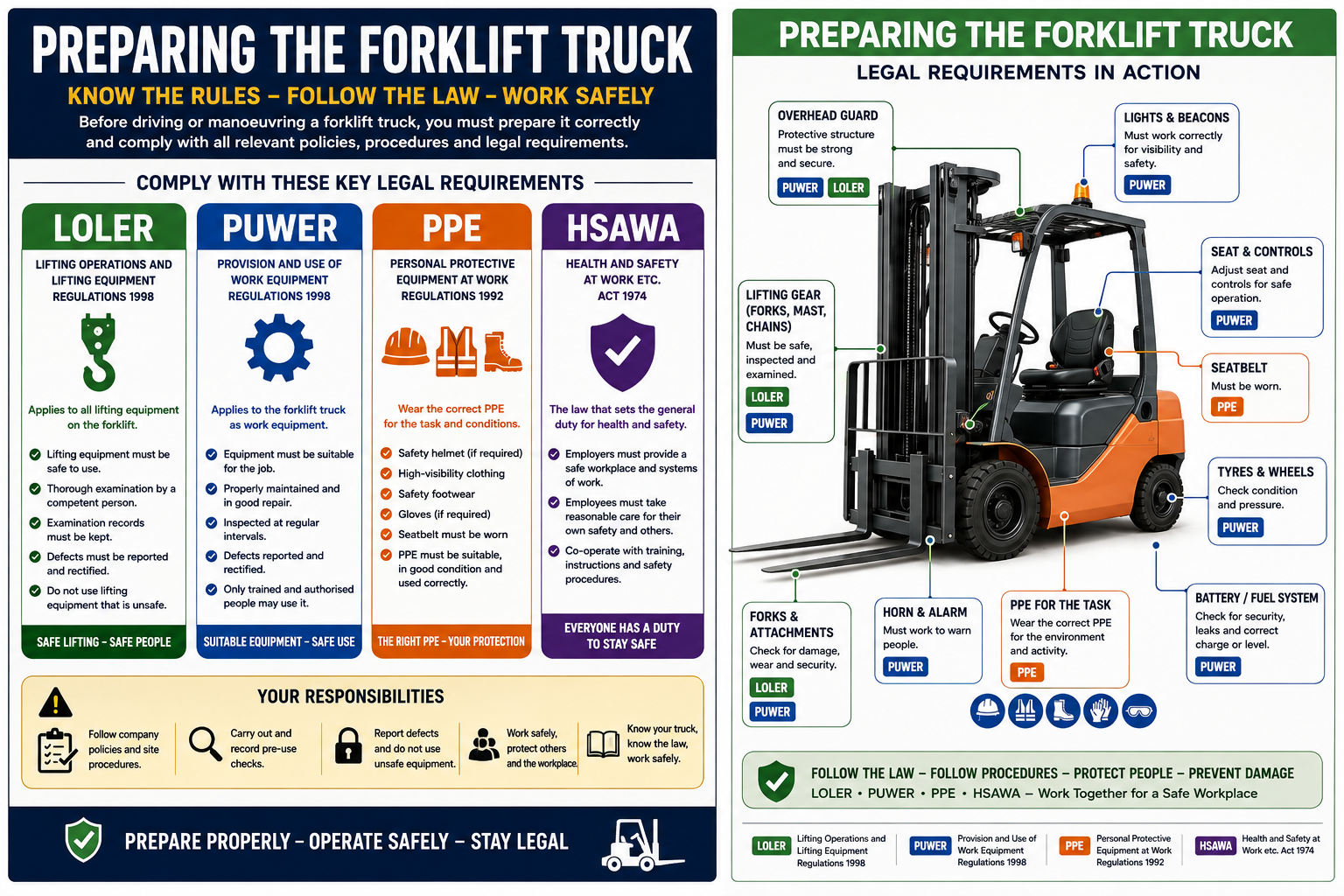
If legislation is new to you, think of this as your "before you drive" checklist. For Unit 201, you need to explain how your site rules connect to these four areas:
- a. Health, safety and security: site traffic routes, pedestrian safety, reporting defects, preventing unauthorised use, and safe parking.
- b. Personal protective equipment (PPE): wear the right PPE for your site and task, check it is fit for purpose, and use it every time.
- c. Legal requirements: the truck must be suitable, maintained and used correctly, and lifting tasks must be planned and carried out safely.
- d. Operating requirements: follow company method statements, daily checks, fuel or battery checks, and recording procedures.
Simple memory line: Safe place, safe machine, safe person, safe process.
Health and Safety Legislation Made Simple Legal essentials
You do not need to memorise full legal wording. You do need to understand what each regulation means in real forklift work.
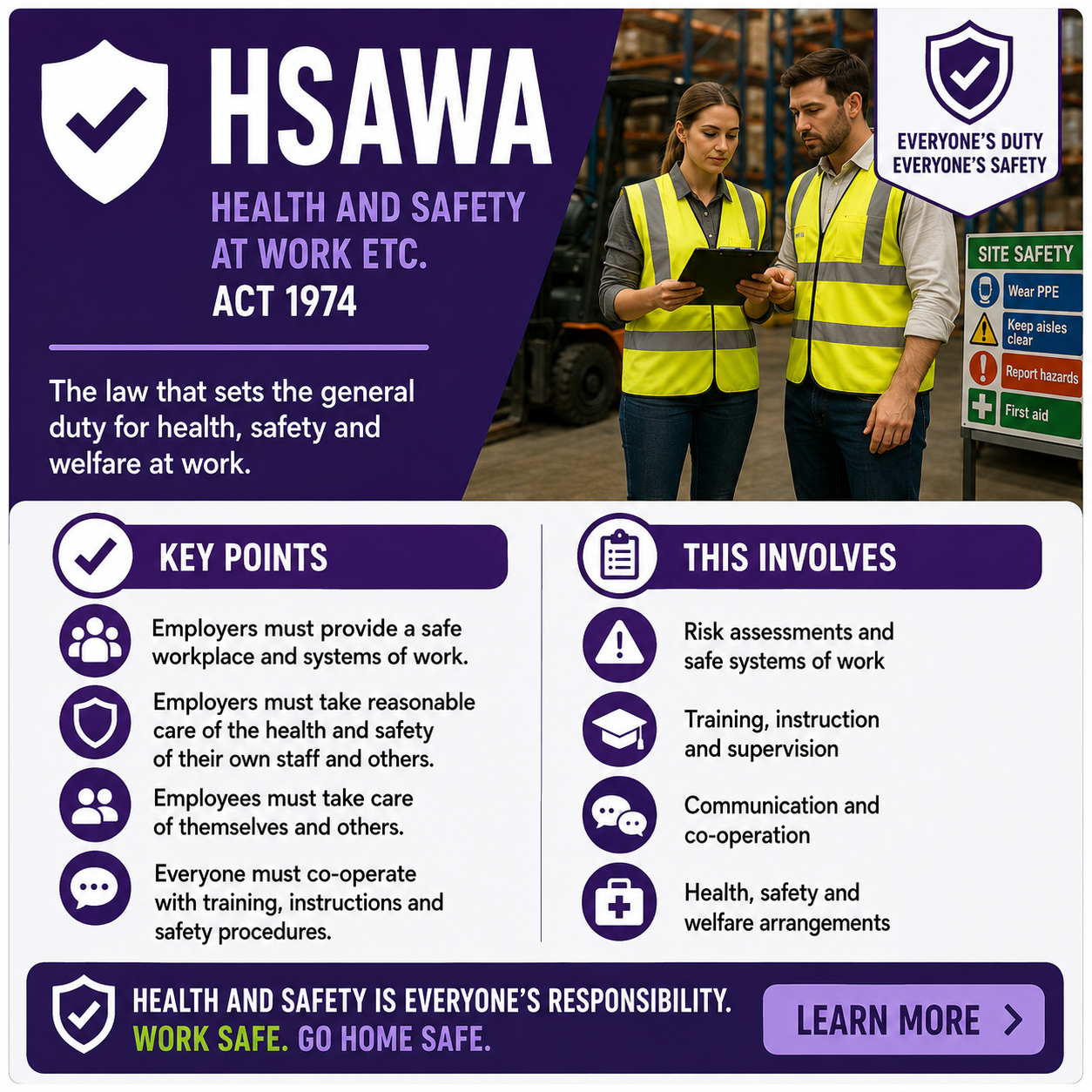
Health and Safety at Work Act (HSWA 1974)
- Employers must provide safe systems, safe places, safe equipment, competent colleagues and welfare facilities.
- Employers must inform workers about work-related risks.
- Your duty (Section 7): take reasonable care of yourself and others, and cooperate with your employer.
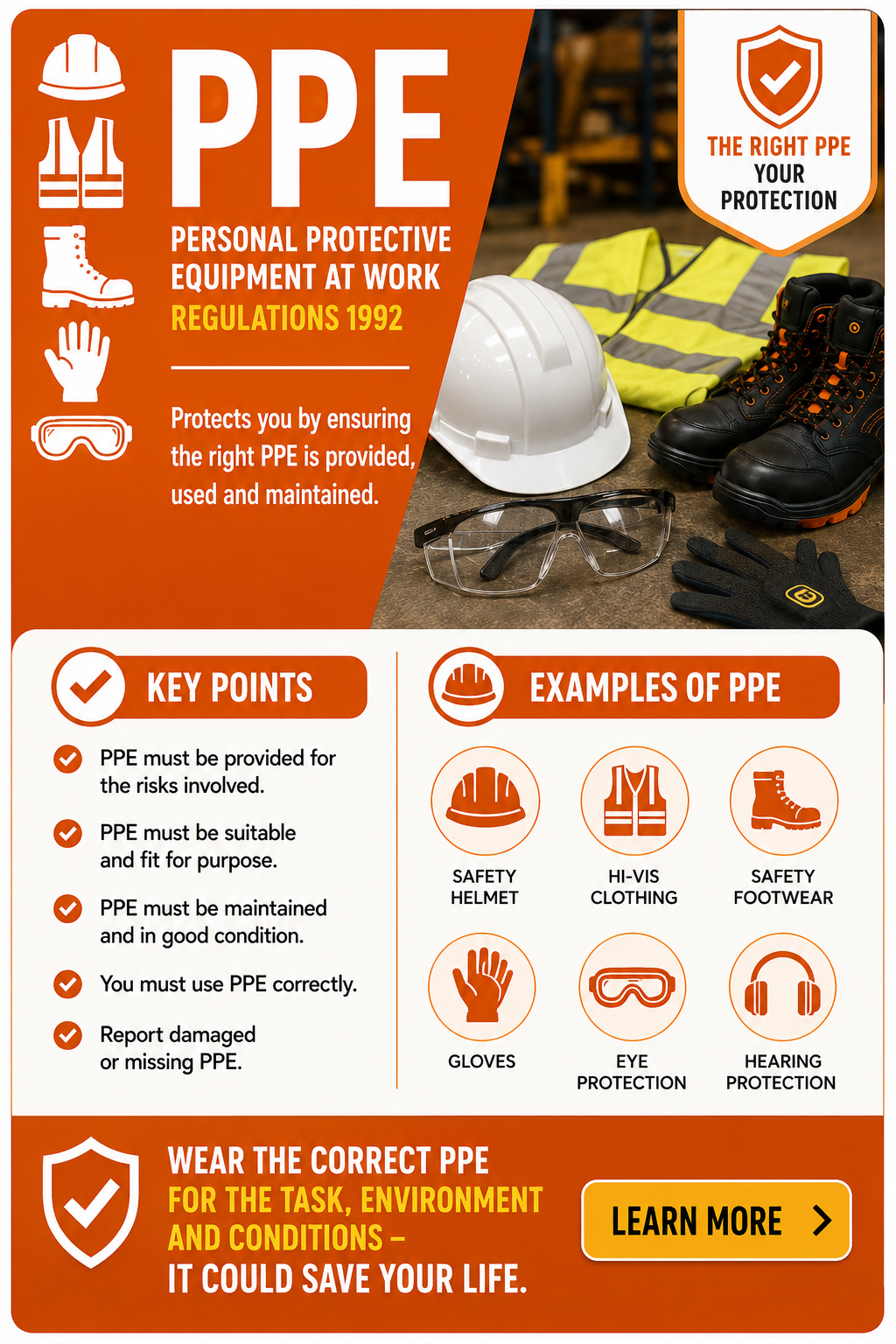
Personal Protective Equipment Regulations (PPE 1992)
- Employer must provide suitable PPE where needed.
- You must wear PPE correctly and look after it.
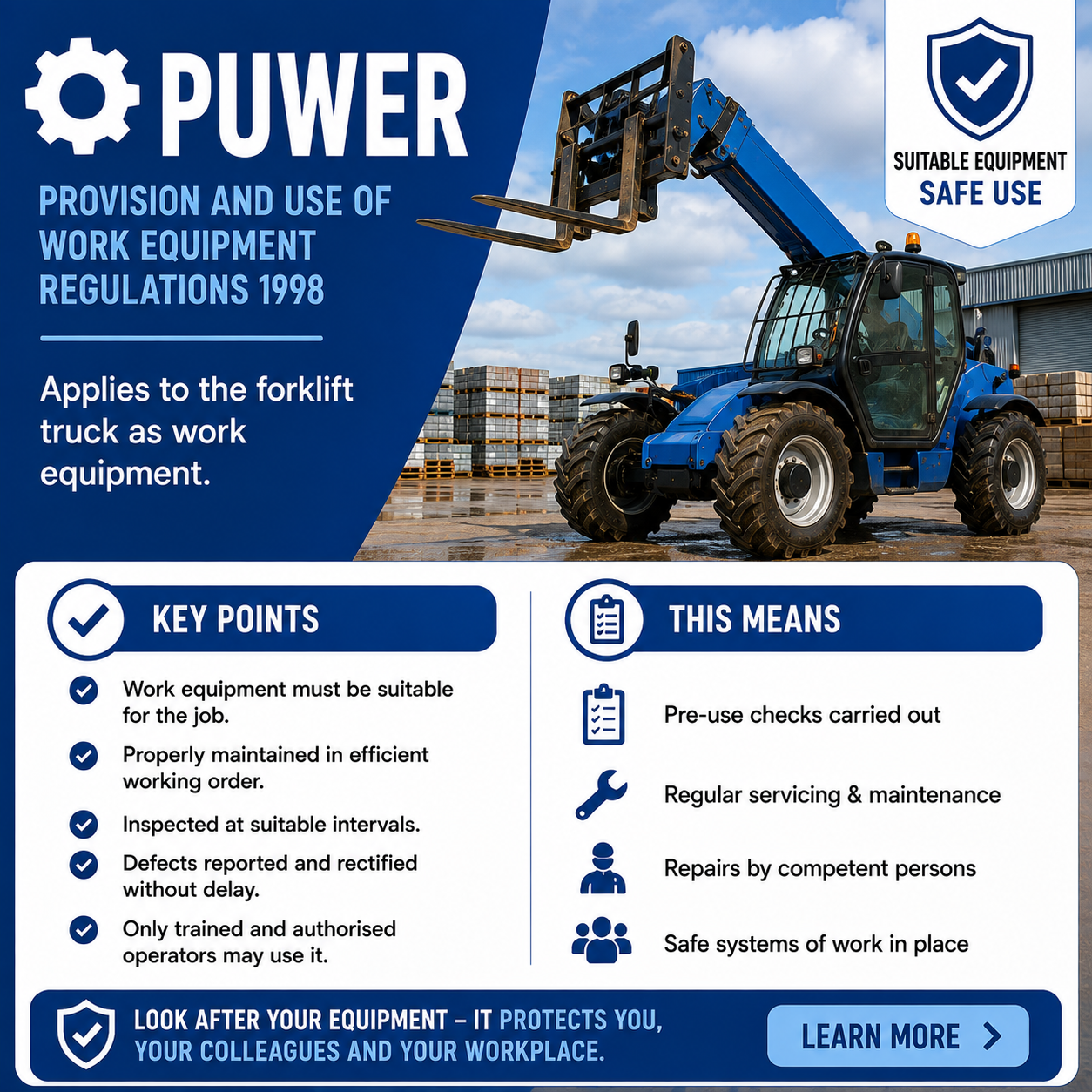
Provision and Use of Work Equipment Regulations (PUWER 1998)
- Regulation 4 (Suitability): equipment must be right for the job and conditions.
- Regulation 5 (Maintenance): equipment must be kept in efficient working order and maintenance logs kept up to date where used.
- In short: only use equipment for the job it is designed for.
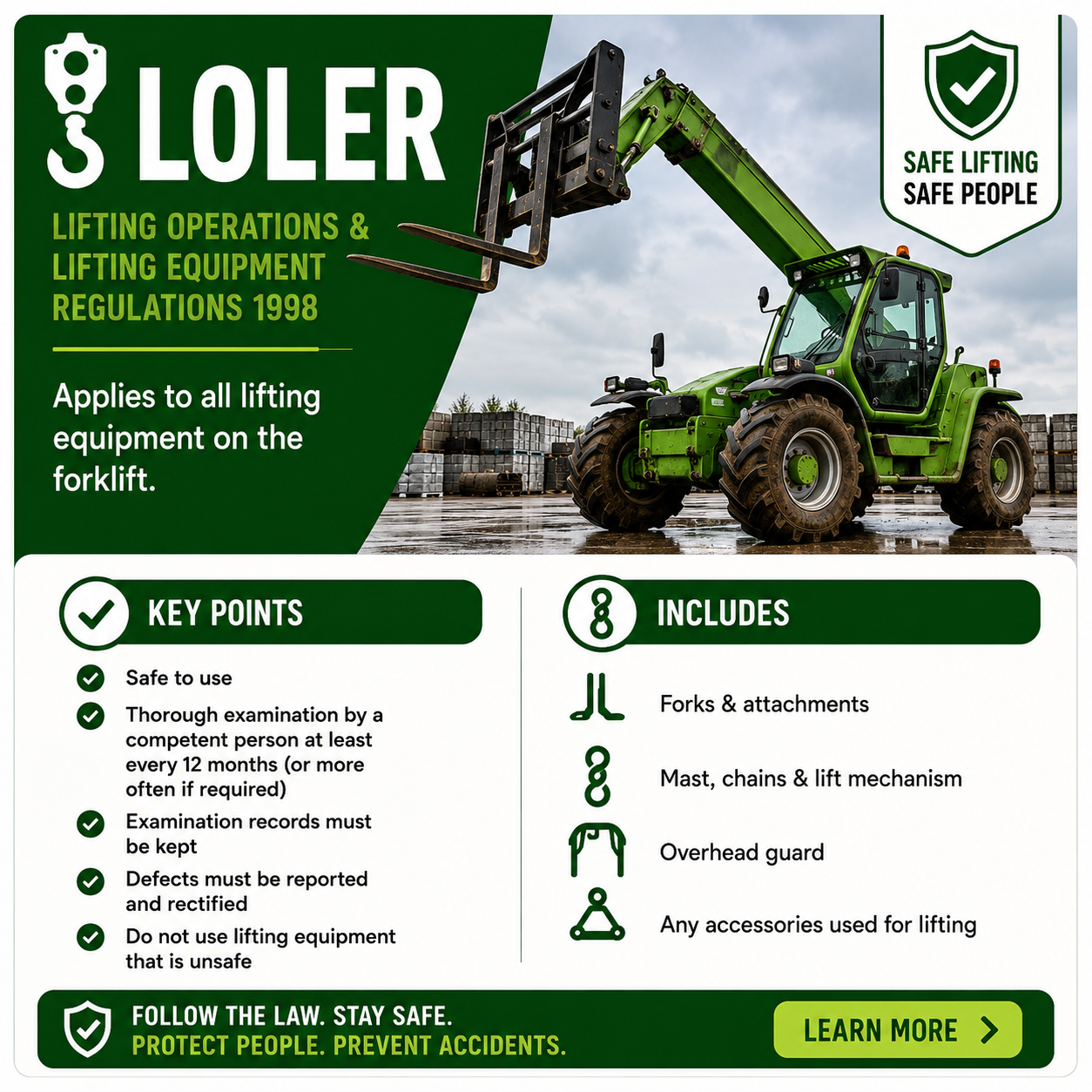
Lifting Operations and Lifting Equipment Regulations (LOLER 1998)
- Lifting equipment must be fit for purpose, suitable for the task, correctly marked, and thoroughly examined at required intervals.
- Lifting operations must be planned, supervised and carried out by competent people.
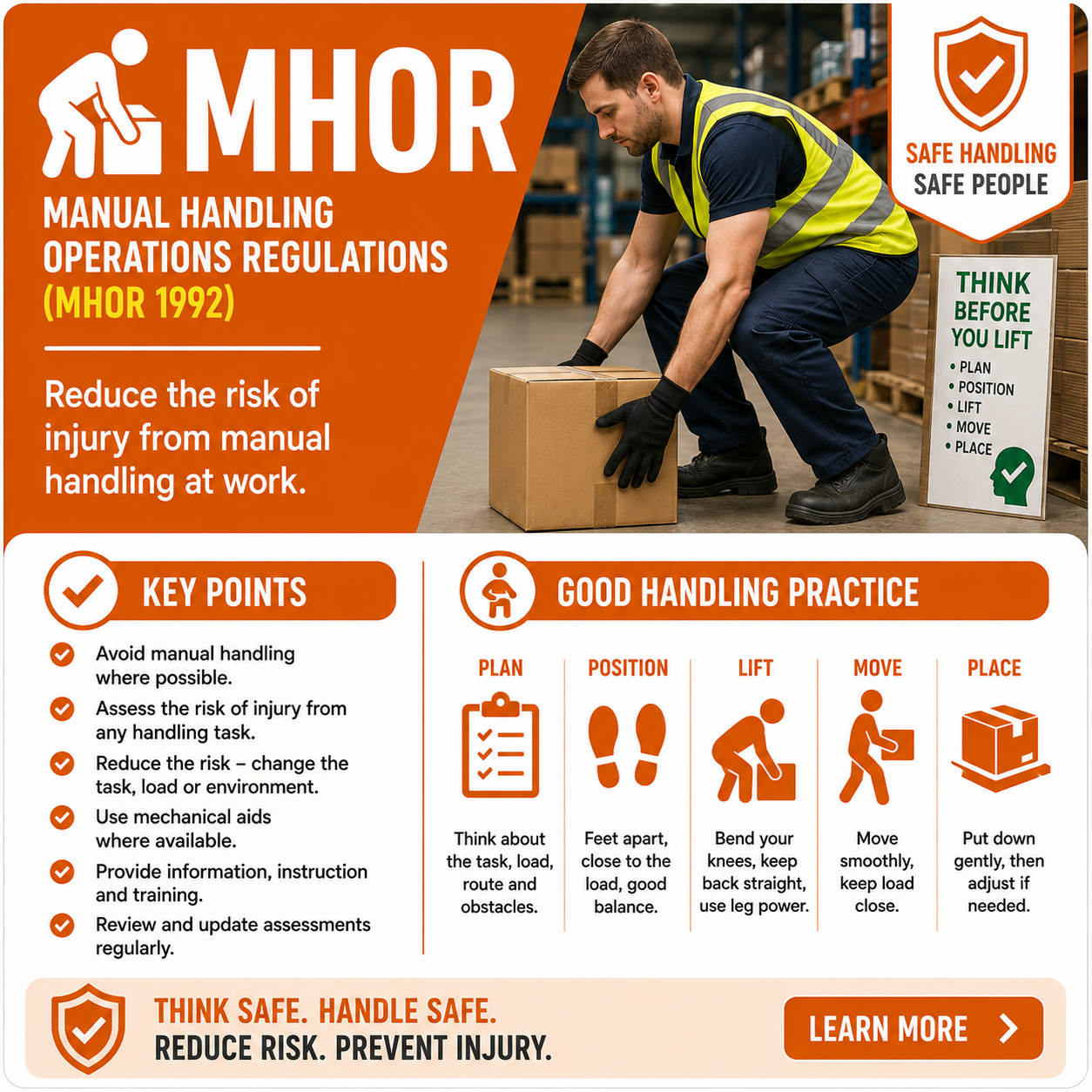
Manual Handling Operations Regulations (MHOR 1992)
- Avoid manual handling where reasonably practicable.
- If it cannot be avoided, assess the task and reduce the risk as far as possible.
Your Duties on Shift (Real World Version) On-shift behaviour
- Be fit for work and follow instructions.
- No alcohol or messing around on plant.
- Use all machinery and equipment safely.
- Report defects and unsafe situations quickly.
- Wear required PPE every time.
- Think about others: pedestrians, workmates and visitors.
Mobile phone question to discuss: Where do mobile phones fit in all this? On most sites, phone use while operating or manoeuvring is prohibited because it reduces attention and increases collision risk.
Revision Prompts for Practice Quick fire
- Can you explain your pre-shift checks in the exact order you perform them?
- What signs of electrical or mechanical problems would make you stop and report?
- How do you confirm the truck is legal and safe before moving?
- Who do you report defects to, and where is that recorded on your site?
Go to the interactive revision page
Pair Challenge
With a partner, each explain one risk and one control from this unit. Score each response out of 3 for clarity and accuracy.
How confident are you on this section?
Pick one to save your progress on this device.